Topic of Invited talk
Lecture 1:Multi-Scale Analysis for Optimizing Composite Material Manufacturing
Lecture 2:Development of Sandwich-type Structural Batteries with Integrated Pressurization and Thermal Management System to Improve LifespanLecture 3:Electronic packaging enhancement engineered by reducing the bonding temperature via modified cure cycle
Biography
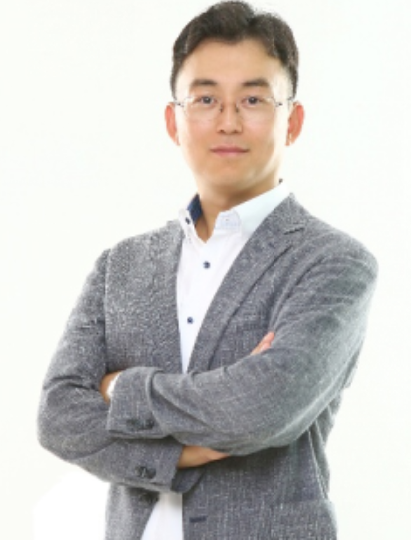
Prof. Seong Su Kim is a Professor in the Department of Mechanical Engineering at KAIST.
After receiving his Ph.D. degree from KAIST in 2007, he worked for two years at KAIST as a research professor. He moved to the University of Tokyo in Japan in 2009 as a Global Centers of Excellence Program (GCOE) researcher. From 2010 to 2017, he worked as an Assistant Professor and Associate Professor of the Department of Organic Materials and Fiber Engineering at Chonbuk National University in Korea. He joined the Department of Mechanical Engineering at KAIST in February, 2017.
Prof. Kim has expertise in mechanical design of composite structures and improvement of energy storage systems using functional composite materials.
Professor Kim has served as an editor for Materials Today Communications, International Journal of Automotive Technology, and Steel and Composite Structures.
Summary
Multi-Scale Analysis for Optimizing Composite Material Manufacturing
Despite the development ofcompositeapplicationtechnologies in recent decades, the manufacturing process that greatly affects the performance of composite materials still depends on the empirical approach, and the understanding of the physical phenomena occurring during the manufacturing process is insufficient. The key in the composite material manufacturing process is to minimize the pores inside the resin by uniformly impregnating it between the fiber bundles. Sincemostoftheprevious studies analyzedtheflowof resin duringtheprocessonasinglescale,therewasa limit to accurately predicting theeffectoftheprocesson the propertiesofthecompositematerials. In this study, through multi-scale analysis, from the fiber unit distribution to the resin flow in the composite laminate, the optimum curing cycle wassuggested to reducetheporesandenhance the physical properties of the composite material.
Development of Sandwich-type Structural Batteries with Integrated Pressurization and Thermal Management System to Improve Lifespan
With the development of the automobile and aerospace industries, carbon fiber reinforced plastic (CFRP) with high specific stiffness and specific strength has been used to create structures for weight reduction. Structural batteries that integrate a CFRP structure with energy storage capabilities are being studied. Especially, sandwich-type structural batteries with commercial batteries embedded between CFRP skin are the closest to industrialization with their high energy density and stability. However, a limitation of these structural batteries is that they cannot be replaced after the embedded battery’s lifespan has been exhausted. To maximize the lifespan of the embedded battery, a sandwich-type structural battery with integrated pressurization and preheating functions was proposed. By applying pressure using the fastening force of curved CFRP skins, the capacity retention of the embedded battery was improved, thereby increasing the lifespan. In addition, a thermal management system for the structural battery was developed using hybrid composites, which are made of carbon paper and glass fabric, as compression pads. The developed pressurization and thermal management system are integrated and fastened with CFRP brackets to complete the structural battery.
Electronic packaging enhancement engineered by reducing the bonding temperature via modified cure cycle
Recently, with the rapid increase in demand of ultra-thin and high-performance electronic devices, the demand for the development of the ultra-thin semiconductor package has been rapidly increasing. Packaging technology is emerging as a core technology for producing the ultra-thin semiconductor package as the reduction technology of materials consisting of the semiconductor package has come to the its end. However, as the ultra-thin semiconductor package reduce the area moment of inertial, the warpage of semiconductor package occurs due to thermal residual stress by coefficient of thermal expansion mis-match during the epoxy molding compound (EMC)’s curing process (packaging process). The reliability of semiconductor package is adversely affected by the delamination of the inside of the semiconductor and crack of parts, etc., caused by the warpage, thus resulted in lowering the production yield, which causes the semiconductor price to rise.
In this work, the development of the curing process for the EMC to reduce warpage in semiconductor packages is focused. The warpage of the semiconductor package according to the bonding temperature, which affects the warpage of the semiconductor package, is analyzed. In addition, novel curing process method is developed using a low-power and high-efficiency surface heating element to reduce energy consumption instead of the conventional hot-press process, which consumes high energy consumption.