Topic of Invited talk
Bayesian Learning Framework for Data-Driven Uncertainty Quantification in Engineering Simulations
Biography
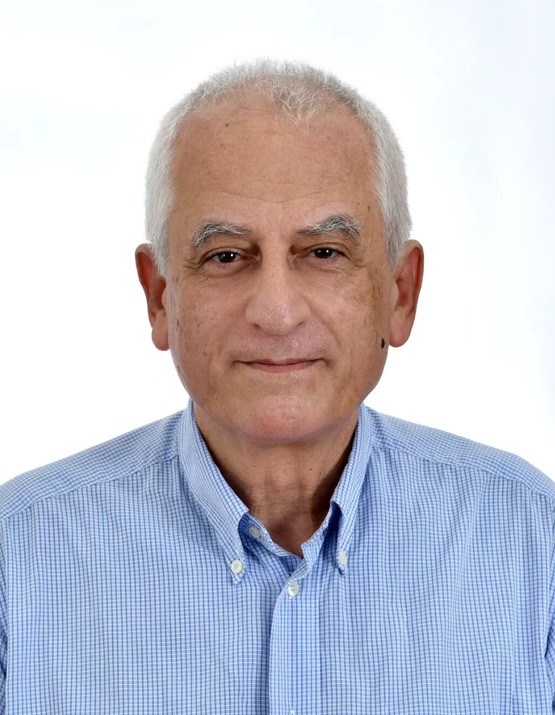
Costas Papadimitriou (PhD Caltech) is Professor at the University of Thessaly (UTH) and director of the System Dynamics Laboratory. He held the position of the Executive Vice-President of the European Association of Structural Dynamics (EASD) (2011-17). He served as Deputy Director of Smart Production and Smart Cities Institute of UTH (2020-23). He currently serves as member of the Sectoral Scientific Council (SSC) on Artificial Intelligence of the Greek National Council of Research and Technology (GNCRT) and served as associate member of SSC on Engineering Sciences (Oct. 2014-16) of GNCRT. He is the recipient of the 2014 European Association of Structural Dynamics Senior Award in Computational Structural Dynamics. He served/serves as associate editor for the ASCE Journal of Engineering Mechanics (2009-17) and the Structural Control and Health Monitoring (2022-present); member of the editorial board of international journals; Chair of the Dynamics committee of ASCE-EMI (2012-14). He also served as member of the ASCE-EMI committees of Dynamics, Structural Control and Health Monitoring, and Probabilistic Methods.
His research interests include data-driven uncertainty quantification in engineering science; Bayesian learning techniques; stochastic computational mechanics; finite element model updating; structural identification, structural health monitoring; virtual sensing; structural reliability; optimal design under uncertainty. He has published 150 referred journal articles, 200+ conference proceedings articles, one book, co-edited two books, 5 conference proceedings, four book chapters, and acted as Guest Editor in 5 special journal issues. His research has been funded by national, European, and international agencies, including USA-NSF, Europe-Horizon 2020, Europe-Horizon 2021-2027, Hong Kong Research Grant Council, and the Greek General Secretary of Research and Technology. He has given numerous invited, keynote, semi-plenary and plenary lectures in international conferences and universities. He has co-organised conferences and organized numerous Mini-symposia, Symposia, and sessions for international conferences. He has coordinated and lectured several one- and two-day pre-conference courses and one-week short courses in his research area.
Summary
Physics-based simulations are routinely used to support decisions concerning the performance and safety of engineering systems. Uncertainties arising from modelling assumptions and from the interaction of systems with their environment must be rigorously quantified, as they strongly influence design and maintenance choices. These uncertainties stem primarily from experimental, environmental (e.g., temperature), manufacturing and operational (e.g., loading) variabilities, as well as from model error and assembly processes. Data obtained from integrated sensing systems provide essential information for updating physics-based models and for ensuring reliability and safety throughout a system’s lifespan.
Bayesian learning (BL) of physics-based models offers a coherent framework for uncertainty quantification and propagation. This lecture presents conventional and hierarchical batch and sequential Bayesian learning techniques for input-state-parameter estimation, virtual sensing and response reconstruction of safety-critical quantities of interest, condition monitoring, and reliability updating of engineering systems by integrating sensor data with physics-based models. The framework is further extended to assess the condition and performance of unobserved system components within a population of similar systems through knowledge transfer from monitored components, while preserving the variability and uncertainty inherent in the population. By combining utility theory with information-theoretic measures, the Bayesian learning framework also enables optimal allocation of resources and the uncertainty-aware design of sensor configurations that maximize the information content of the collected data. Theoretical and computational aspects of the proposed framework are discussed. Applications drawn from various engineering fields illustrate the effectiveness of the Bayesian learning framework.