Topic of Invited talk
Beyond Critical Conditions: A Time-Dependent Approach to Fracture and Irreversible Deformation
Biography
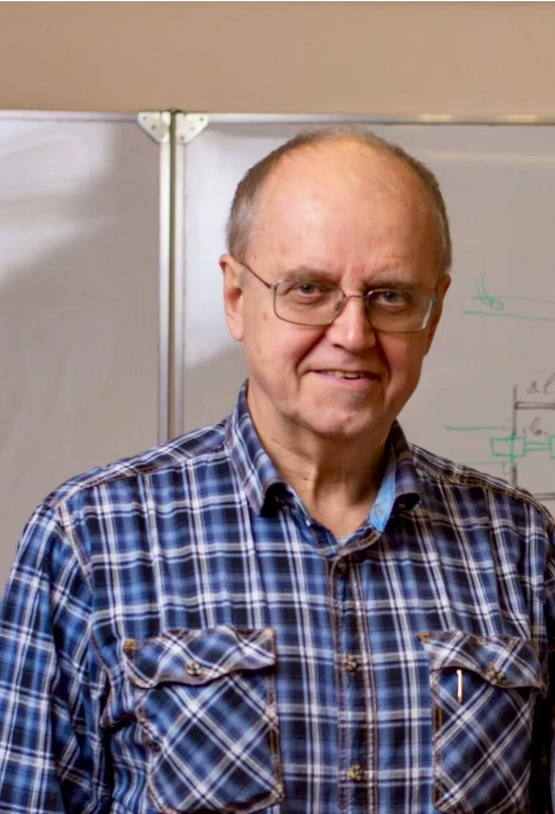
Professor Yuri V. Petrov is an academician of the Russian Academy of Sciences (RAS), Professor at the Faculty of Mathematicsand Mechanics of St. Petersburg State University, Head of the Department of Extreme States of Materials and Structures at the Institute for Problems in Mechanical Engineering of the RAS, and Director of the Research Centre of Dynamics.
Professor Petrov is the founder and leader of the scientific school of Extreme State Mechanics, devoted to the mechanics and physics of materials and continua subjected to intense dynamic and thermomechanical loading. His research focuses on fundamental mechanisms of fracture, irreversible deformation, plasticity, and other abrupt transformations under extreme conditions.
A major contribution of Professor Petrov is the development of the material incubation-time concept, introduced as a characteristic, scale-dependent measure of the response of materials to dynamic loading. This approach has provided a unified framework for the analysis and prediction of a broad range of transient phenomena, including brittle fracture, plastic deformation, electrical breakdown, cavitation, and detonation. He has also developed a spatial–temporal hierarchy of scales in fracture mechanics and a nonlocal fracture criterion for short cracks in brittle and ceramic materials.
Another important achievement is his relaxation model of plastic deformation, which explicitly incorporates relaxation processes into constitutive equations and provides a new framework for describing unstable deformation, irreversible strains, and failure under advanced plastic loading.
Professor Petrov has authored more than 350 scientific publications, including monographs and book chapters. He has chaired international scientific conferences and serves in leading positions within international mechanics organizations, including ESIS and EUROMECH.
In recognition of his scientific achievements, Professor Petrov was elected a Corresponding Member of the RAS in 2006 and a Full Member in 2025, and was awarded the Medal of the Order “For Merit to the Fatherland”, a state decoration of the Russian Federation.
Summary
Fracture and irreversible deformation are inherently transient processes involving characteristic times of microstructural evolution, relaxation, and damage accumulation. This nature may lead to instability and unexpected changes in critical characteristics and constitutive parameters, making a direct extension of conventional static criteria to time-dependent processes questionable.
An incubation time approach (ITA) is introduced as a framework for describing dynamic fracture and irreversible deformation in terms of the characteristic time required for a critical process to develop. A few examples from dynamic deformation and fracture are presented to illustrate the capabilities of the ITA. Attention is paid to effects that are difficult to explain within conventional rate-dependent models, including the instability of critical characteristics and the anomalous dependence of strength on loading rate.
The approach is further considered in the context of cyclic and repeated deformation, where the accumulation of irreversible changes occurs over a sequence of loading cycles rather than through an instantaneous transition. These examples demonstrate that characteristic times accounting relaxation mechanisms can provide a unified way of interpreting apparently different dynamic and cyclic phenomena.
An important motivation for developing such approaches is the rapid emergence of new classes of materials, including ultrafine-grained and nanostructured materials. Their mechanical response may differ qualitatively from that of conventional materials, and standard experimental methods and critical criteria developed for traditional materials are not always sufficient to characterize their dynamic strength, fracture resistance, and service behavior. In this context, the incubation time approach provides a potentially useful framework for interpreting and predicting the response of advanced materials under dynamic and cyclic loading.