Topic of Invited talk
AI in Engineering: From Surrogate Models to Agentic AI
Biography
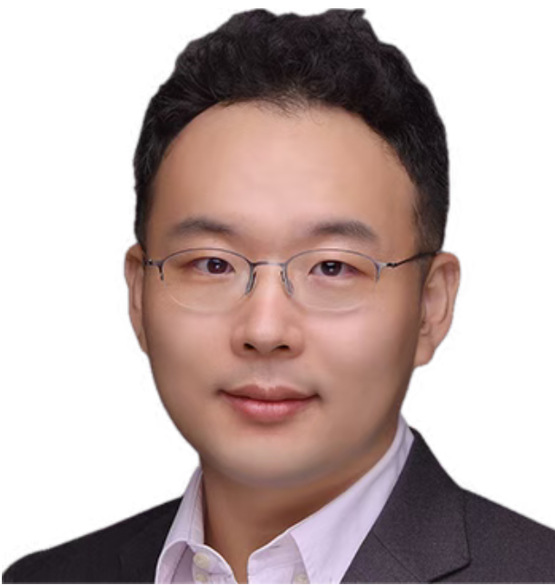
Professor Seunghwa Ryu is an Endowed Chair Professor of Mechanical Engineering, Head of the Department of AX, and Director of the PRISM-AI Center for Manufacturing AI at KAIST. He received his B.S. in Physics from KAIST in 2004 and his Ph.D. in Physics from Stanford University in 2011, followed by postdoctoral research at MIT. He has held visiting appointments at UC Berkeley, Stanford University, and the University of Trento, and is a member of the Young Korean Academy of Science and Technology (Y-KAST). His research focuses on multiscale and multiphysics modeling of materials and structures, homogenization of composites, and AI-based engineering design and manufacturing. His group develops machine-learning and physics-informed approaches for material modeling, inverse design, optimization, and manufacturing applications, including additive manufacturing. His work combines artificial intelligence with numerical simulations and experiments to improve the design of materials, structures, and processes.
Summary
Artificial intelligence is rapidly transforming engineering research and practice, yet its successful application requires more than simply adopting the latest machine-learning models. Engineering problems are often characterized by limited and unevenly distributed data, large design spaces, strict physical constraints, and the need for reliable extrapolation beyond previously observed conditions. This lecture provides an engineering-oriented overview of the evolving AI landscape, ranging from data-driven surrogate modeling and generative design to physics-informed AI and multi-agent large language model systems. Through examples from mechanics, materials, and manufacturing, the lecture will discuss how physical and domain knowledge can improve data efficiency, predictive consistency, and inverse design performance. It will also introduce agentic AI systems that coordinate simulation and optimization workflows while incorporating engineering knowledge through user-friendly natural-language interfaces. The presentation will highlight both the opportunities and limitations of current approaches and discuss the transition from purely data-driven models toward knowledge-guided, autonomous, and human-centered engineering AI.