Topic of Invited talk
Mechanism-Based Constitutive Modeling of Advanced Metallic Materials Across Length Scales
Biography
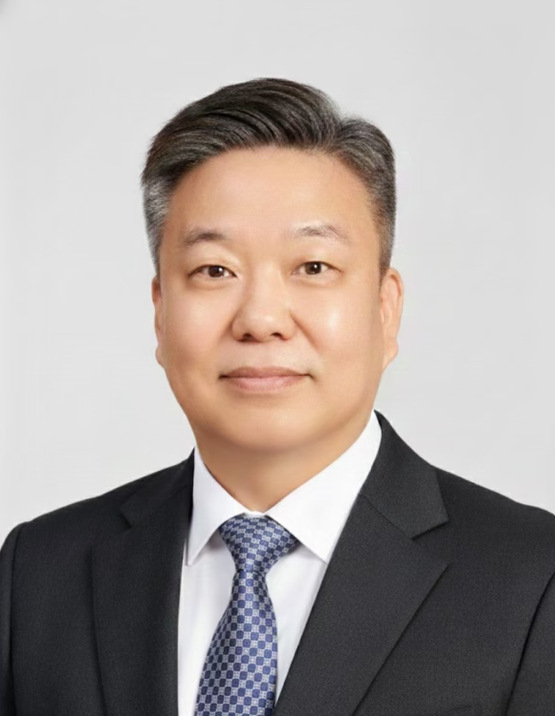
Prof. Hyoung Seop Kim is the SeAh Chair Professor and Dean of the Graduate Institute of Ferrous and Energy Materials Technology (GIFT) at Pohang University of Science and Technology (POSTECH), South Korea. He also holds a joint appointment in the Department of Materials Science and Engineering at POSTECH. He received his B.S., M.S., and Ph.D. degrees in Metallurgical Engineering from Seoul National University. Throughout his distinguished career, Prof. Kim has served in numerous high-level leadership positions, including Vice-President for Research at POSTECH, Director of the Future Material Discovery Center for High Entropy Alloys, and Director of the Engineering Research Center (ERC) for Heterogenic Metal Additive Manufacturing. Globally, he serves as a Principal Investigator at the Advanced Institute for Materials Research (AIMR) at Tohoku University, Japan. In recognition of his academic leadership, he is the President of the Korean Institute of Metals and Materials (KIM) for 2026, and previously served as President of the Korean Society for Technology of Plasticity (2022) and the Korean Powder Metallurgy Institute (2019). Prof. Kim is an elected Fellow of both the National Academy of Engineering of Korea (NAEK) and the Korea Academy of Science and Technology (KAST), as well as a Foreign Fellow of the Indian National Academy of Engineering (INAE). He maintains strong editorial roles in top journals, serving as Editor-in-Chief of Metals and Materials International and Korean Journal of Metals and Materials, and an Editor for Materials Research Letters and Intermetallics. He has received numerous prestigious accolades, including the Medal of Science and Technology from the Korean Government, the POSCO Award, the TMS MPMD Distinguished Scientist Award, and the Springer Nature Editorial Contribution Award. As a world-renowned scholar in physical metallurgy, high-entropy alloys, and additive manufacturing, he has published over 1,182 SCI papers, accumulating more than 52,200 citations with a Google Scholar h-index of 106.
Summary
Advanced metallic materials—including high- and medium-entropy alloys (HEAs/MEAs), metastable alloys exhibiting TWIP/TRIP, and architected heterostructured metals—can deliver outstanding combinations of strength, ductility, and damage tolerance. However, their macroscopic response is often difficult to predict because plastic deformation emerges from interacting mechanisms activated across multiple length scales, coupled with pronounced microstructural heterogeneity (e.g., lattice distortion, chemical/phase heterogeneity, and gradient or composite-like architectures).
In this talk, I present a unified, mechanism-based constitutive modeling framework that connects microstructural features to measurable stress–strain behavior through physically informed internal variables. Building on classical concepts of statistically stored dislocations (SSDs) and geometrically necessary dislocations (GNDs), the framework incorporates key physics such as back-stress hardening, strain partitioning among microstructural domains/phases, and phase-specific deformation. Finite element simulations, supported by experimental validation, illustrate how heterogeneity can be leveraged to enhance strain hardening through stress/strain redistribution.
I further introduce constitutive descriptions for TWIP- and TRIP-assisted deformation, including a critical-stress-based representation of deformation-induced martensitic transformation in metastable alloys. The resulting models capture characteristic multi-stage strain hardening in both wrought and additively manufactured materials over a wide temperature range. Overall, this work bridges microstructural design, deformation physics, and constitutive modeling, enabling predictive insights and transferable principles for designing next-generation structural metals beyond empirical optimization.